Naval Academy grad, Air Force navigator, USAF Test Pilot School graduate. Qualified in 15 aircraft, flown over 70.
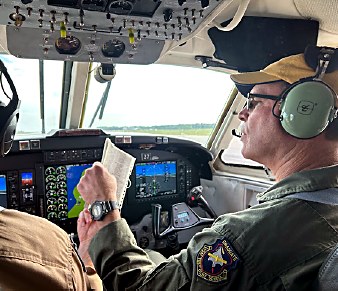
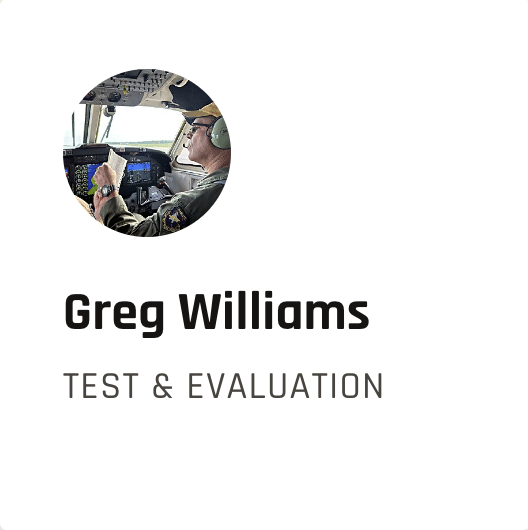
Williams, checklist card in hand
Project Pilot
ASEC
70+ Aircraft Types Flown
TPS USAF Test Pilot School Grad
USNA Cross-commissioned to USAF
PMA-275 Final Tour, CV-22 Program, Pax River
ORIGIN
A Navy Academy Grad Who Went Air Force
Williams’ entire reason for attending the Naval Academy was to fly. His eyes weren’t 20/20, so pilot wasn’t an option, and he set his sights on becoming a Naval Flight Officer instead. He commissioned into the Air Force and became a navigator, back when the job was split into Weapon Systems Officer and Electronic Warfare Officer.
The path from there wound through reconnaissance and fighter cockpits, the RF-4C and the F-4G Wild Weasel, before he used his physics degree to apply to USAF Test Pilot School and complete the Experimental Test Navigator course.
THE DRAW
The Mach Cone You're Not Supposed to See
Williams has flown T-37s, T-38s, F-4s, F-16s, F-15s, F-18s, and the B-1, and enjoyed every one of them. But one memory still stands above the rest.
Flying a two-ship RF-4C back over the Nellis ranges, supersonic at 300 feet, he looked over at their wingman and saw something almost nobody sees with the naked eye: the shockwave itself in the shadows on the ground, refracted through high stratus clouds and disturbing the dirt below like a rooster tail.
“I sure wish that I had a handheld camera to take a picture of that.”
The hardest part of the job isn’t the flying. It’s everything that happens before it: hours of study, and what pilots call chair-flying, running the mission in your head so you’re ready for what could go wrong.
AT ASEC
What a Busy Test Card Tells You
Test Pilot School teaches you to break a system down into its components and think about it differently, a habit Williams still leans on. It also gave him a sharp eye for bad documentation.
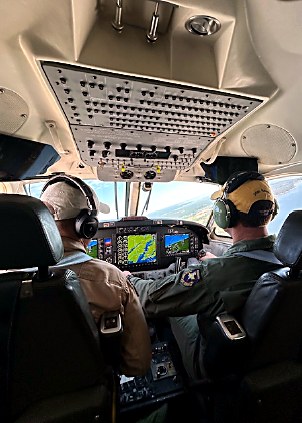
Williams, still flying general aviation for ASEC
CLOSING
Good Folks, Hard Problems
Williams’ advice for communication at ASEC is simple: keep everyone informed, and never be afraid to ask a question. If something doesn’t make sense to you, it probably doesn’t make sense to someone else either.
“If a young engineer or aviator wants to enter the world of flight test, I’d recommend for them to do it if they enjoy being around good folks and enjoy challenging themselves.”